

Kansas City
Hiring a Rebar Contractor in Kansas City: A GC's Checklist
What to ask a reinforcement subcontractor before you award — the questions that predict whether your pour dates hold, and why the bid spread is the least informative number in the package.
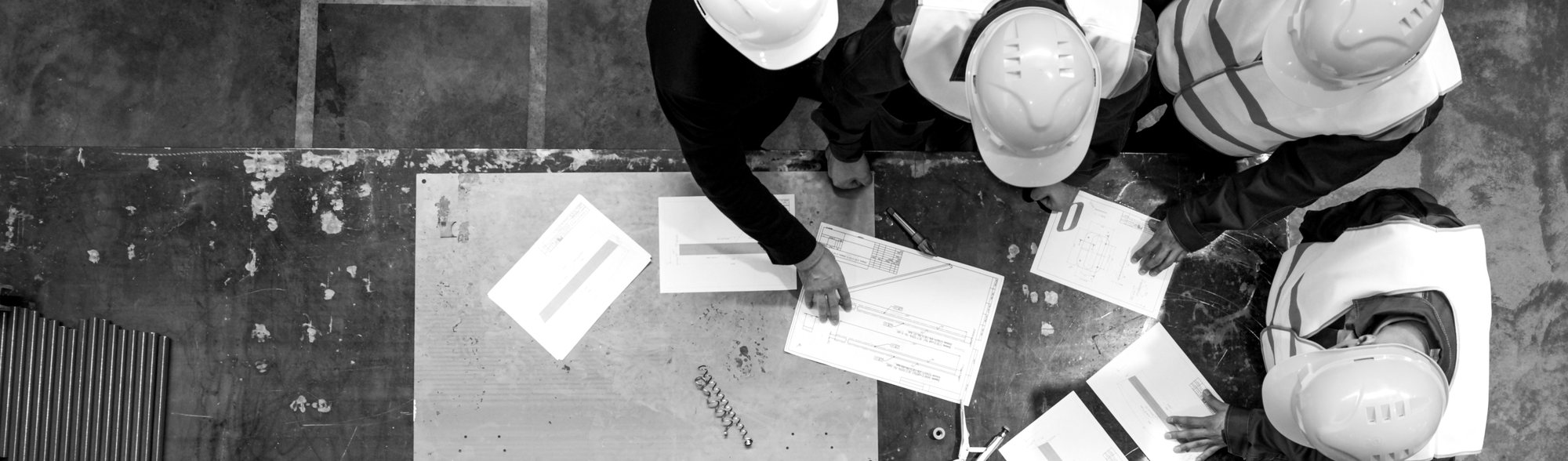
Reinforcement is on the critical path and it is largely invisible once it is covered. Both of those make the selection decision matter more than the bid spread suggests.
It is worth being explicit about why the spread is uninformative. The quantity of steel in a building is knowable — any competent takeoff lands within a few per cent of any other, because the drawings say what is in the building. So when two bids differ by fifteen per cent, they are not disagreeing about steel. They are disagreeing about how long it takes to place and about what they are responsible for. The questions below are a way of finding out which.
Before the number
- Do they detail their own work? A sub who details reads every element and finds conflicts in a submittal instead of on the deck.
- Do they supply as well as place? When the bar list is written by the people who will place the steel, mark numbers and bundles follow the placement sequence.
- Who is the superintendent, and what have they run? Field leadership is the single largest variable in whether a reinforcement package goes well.
- What is the safety record and the safety culture? Not the poster — ask what happens when the schedule and safety disagree.
The first is worth pressing on, because detailing is one of the most common exclusions on a low bid. Excluded, it becomes a separate purchase with its own lead time sitting directly in front of your first pour — and it becomes a handoff, where the person who finds a problem is not the person who created it. Ask who reviews the submittal before it reaches the engineer.
The second sounds like a procurement convenience and is a scheduling one. Bundles tagged and delivered in the order the crew will place them let a crew work straight off the truck; bundles organised for shop efficiency produce a laydown yard that has to be excavated to find the next one, every day, for the length of the job.
The third is the one experienced GCs ask first. Most of what determines whether placement goes well was decided before the crew arrived — but the superintendent is who decides what happens when a bar cannot go where the drawing says, at seven in the morning, with a pump booked. There are two possible answers to that, and which one a contractor gives under pressure is most of what you are buying.
About the bid itself
- What did you assume about staging? A tight urban site with no laydown is a different job, and a bid that assumed otherwise will find out later.
- What pour sizes did you price? Many small pours cost more per ton than a few large ones.
- Is detailing and coordination inside the number?
- What inspection window did you assume? A sub who has not left one has not planned to be inspected.
That last question is the sharpest one on the list and the least often asked. Placement is not finished when the last tie is made; it is finished when the work has been walked and the cover verified. A sequence with no gap between the last tie and the concrete has quietly removed the only opportunity to find anything — and it is the compression nobody has to announce, because the pour date stays where it is and the start slips.
Two more worth adding to the list. Are supports and accessories counted or carried as a percentage? Chairs and bolsters are the mechanism by which specified cover becomes achieved cover, and a percentage is a guess that gets trimmed when a job gets tight. And what does the bid exclude? The exclusions page is the most useful page in any reinforcement bid and the one most rarely read — two bids excluding different things were never comparable, and the gap between them is a list of things somebody pays for later.
Local specifics
- Kansas City is a two-state metro. Confirm the sub works comfortably across Missouri and Kansas.
- Winter is a scheduling fact. Ask how the sequence accounts for the days that will be lost.
- Union coordination. Field leadership at Rucker is Iron Workers Local 10; on union jobs, ask how any sub handles crew and jurisdiction.
There is a fourth that has become material recently: crew availability in the busy weeks. Not how many ironworkers can be on site on a good day, but how many in week eleven when other jobs in this market want the same people. Data centre work in the Northland is absorbing a growing share of the skilled workforce, and a bid that assumes a crew size the market cannot supply has a date problem inside it.
On winter: the useful version of that question is not "do you work in the cold" but "where does your sequence put the weather-sensitive placements". Cold-weather work in this metro is a planning discipline rather than a heroism one, and the answer reveals whether a sub has thought about it before January.
What the answers are actually telling you
Taken together these questions test one thing: whether a contractor's process finds problems early or late. That is the whole of it.
The same conflict has three prices depending on where it surfaces. In the submittal it costs a revision. During placement it costs a morning. After the pour it costs a repair and an engineer's assessment. The work required to find it is identical in all three cases — only the timing differs, and the timing is a function of process rather than of effort.
What drives reinforcement cost follows the same logic: placement productivity, congestion and access, not the price of steel, which every bidder buys in broadly the same market.
The short version
The bid tells you what the job costs if everything goes as drawn. The answers to these questions tell you what happens when it does not — and that is the number you are actually buying.
Rucker Construction is a Kansas City–based reinforcement specialist working with general contractors, subcontractors and developers across the metro, and across Missouri, Kansas, Iowa, Nebraska and Oklahoma. What that scope covers runs from takeoff through detailing, fabrication, delivery, placement and inspection. If you want to test these questions on a live package, send it over.